Protect Your Online Privacy: Simple Ways to Hide Your IP Address
Your IP address is a digital fingerprint, a unique identifier that marks your presence on the internet. Understanding what it is and why it matters is the first step towards protecting your online privacy.
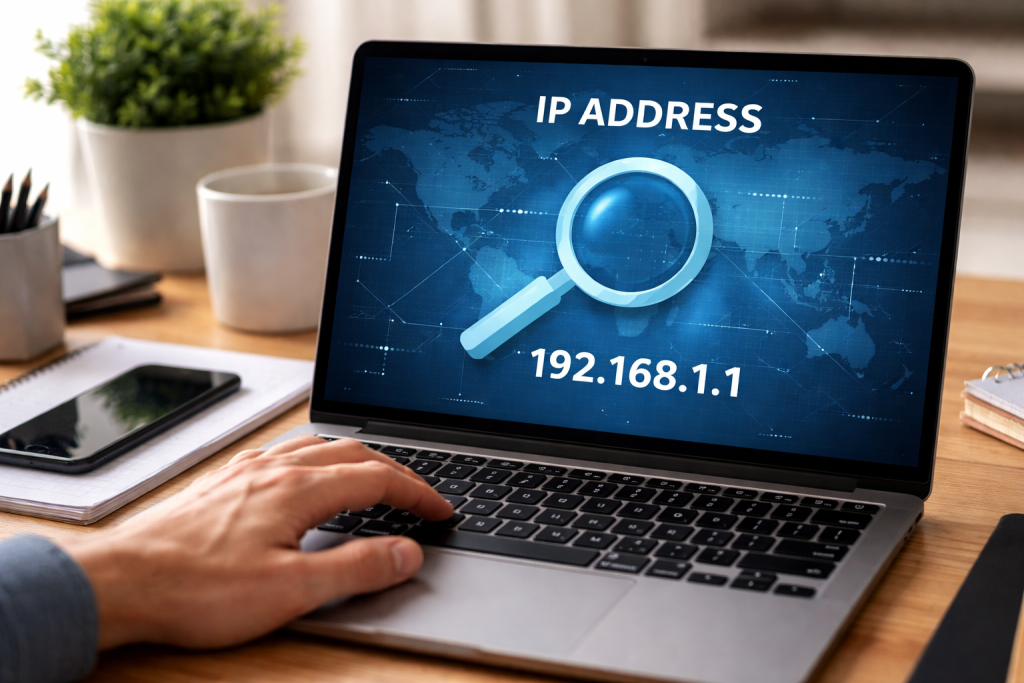
An Internet Protocol (IP) address is like a postal address for your device on the internet. It allows devices to locate and communicate with each other. When you connect to the internet, your Internet Service Provider (ISP) assigns your device an IP address. This address can be dynamic, meaning it changes periodically, or static, remaining the same. For the average user, the distinction between dynamic and static IP addresses might seem minor, but for privacy-conscious individuals, a consistent identifier can be a point of concern.
Contents
- 0.1 What is an IP address?
- 0.2 Why Should You Hide Your IP Address?
- 0.3 Geolocation Tracking
- 0.4 Targeted Advertising and Profiling
- 0.5 Security Vulnerabilities
- 0.6 Censorship and Geo-Restrictions
- 0.7 Online Harassment and Doxing
- 0.8 Using Proxy Servers
- 0.9 The Tor Network
- 0.10 How VPNs Protect Your IP Address
- 0.11 Benefits of Using a VPN
- 0.12 Choosing a Reputable VPN Service
- 0.13 What are Privacy-Focused Browser Extensions?
- 0.14 Popular Privacy Extensions and Their Functions
- 0.15 How Extensions Work Together
- 0.16 Mobile VPN Apps
- 0.17 Private Browsers for Mobile
- 0.18 Understanding Mobile Network Settings
- 0.19 Regular Software Updates
- 0.20 Strong, Unique Passwords
- 0.21 Enable Two-Factor Authentication (2FA)
- 0.22 Be Mindful of What You Share
- 0.23 Review App Permissions
- 0.24 Understand HTTPS
- 1 FAQs
- 1.1 What is an IP Address and Why Should You Hide It?
- 1.2 The Risks of Exposing Your IP Address Online
- 1.3 Simple Methods to Hide Your IP Address
- 1.4 Using Virtual Private Networks (VPNs) for Online Privacy
- 1.5 The Importance of Browser Extensions for IP Address Protection
- 1.6 How to Safeguard Your IP Address on Mobile Devices
- 1.7 Tips for Maintaining Online Privacy and Security
What is an IP address?
At its core, an IP address is a numerical label assigned to each device connected to a computer network that uses the Internet Protocol for communication. It serves two main functions: host or network interface identification and location addressing. Think of it as the address on an envelope: it tells the postal service (the internet) where to deliver your data and where it came from. Without these addresses, data packets would wander endlessly, unable to find their destination.
Why Should You Hide Your IP Address?
While not inherently malicious, an IP address can reveal information about your general geographic location. This information, when combined with other data, can be used to build a profile of your online activities. For many, this level of tracking is an invasion of privacy. Protecting your IP address is akin to drawing the blinds on your windows; it limits what others can see from the outside. It’s not about hiding something illicit but about maintaining control over your personal space in the digital realm. Exposing your IP address can make you a target for various reasons.
Your IP address, when visible, acts as a beacon, potentially attracting unwanted attention. This can range from mild annoyances to more significant security threats. Understanding these risks is crucial for appreciating the value of IP address masking.
Geolocation Tracking
As mentioned, an IP address can pinpoint your approximate geographical location. This can be used by websites, advertisers, and even malicious actors to understand where you are. While sometimes used for legitimate purposes like tailoring content to your region, it also opens the door to unwanted surveillance. Imagine a persistent salesperson who knows exactly where you live; that’s the kind of intrusion an exposed IP address can facilitate.
Targeted Advertising and Profiling
Advertisers use IP addresses, along with other data, to create detailed profiles of your browsing habits. This allows them to deliver highly targeted advertisements, which can feel intrusive and exploitative. Your IP address becomes a breadcrumb trail leading advertisers to understand your interests, needs, and even your purchasing habits.
Security Vulnerabilities
In some cases, a publicly visible IP address can be exploited by hackers. While direct attacks based solely on an IP address are less common for average users, it can be a stepping stone in a larger attack. Knowing your IP address allows someone to attempt to directly connect to your device or network, potentially looking for vulnerabilities. It’s like leaving your front door unlocked; it might not be immediately exploited, but it presents an unnecessary risk.
Censorship and Geo-Restrictions
Many online services and content are restricted based on geographical location. By masking your IP address, you can bypass these geo-restrictions, accessing content that might otherwise be unavailable in your region. This can be useful for accessing global news, streaming services, or purely for research purposes.
Online Harassment and Doxing
In extreme cases, an exposed IP address can be used to harass individuals or to “dox” them, which involves revealing private personal information online. This is a serious privacy violation and a direct threat to personal safety.
Fortunately, there are several straightforward methods available to mask your IP address and enhance your online privacy. These methods vary in complexity and effectiveness, offering solutions for different needs.
Using Proxy Servers
A proxy server acts as an intermediary between your device and the internet. When you connect through a proxy, your request first goes to the proxy server, which then forwards it to the website you want to visit. The website sees the IP address of the proxy server, not yours.
Different Types of Proxies
There are various types of proxy servers, each with its own characteristics. Web proxies are the simplest, accessed through a website where you input the URL you wish to visit. They are generally less secure and can be slower. Residential proxies use IP addresses assigned to real home internet connections, making them harder to detect. Datacenter proxies use IP addresses from data centers and are often used for bulk requests or web scraping. Understanding the differences allows you to choose the most appropriate proxy for your needs.
Limitations of Proxy Servers
While effective for masking your IP address, proxy servers are not a perfect solution. Many free proxies are unreliable, slow, and may even log your activity. Furthermore, not all traffic is routed through a proxy, meaning some of your data might still be exposed. They also typically do not encrypt your traffic, leaving it vulnerable to interception. Think of a proxy like a disguise: it changes your appearance, but it doesn’t necessarily shield you from all scrutiny.
The Tor Network
The Onion Router (Tor) is a free and open-source software that enables anonymous communication. It directs internet traffic through a free, worldwide, volunteer overlay network consisting of more than seven thousand relays to conceal a user’s location and usage from anyone conducting network surveillance or traffic analysis.
How Tor Works
Tor works by encrypting your data in multiple layers, like an onion. Each layer is decrypted by a different server (a “node”) in the Tor network. Your traffic bounces through several nodes before reaching its destination, making it incredibly difficult to trace back to you. The exit node, the last server in the chain, then sends your request to the final website. This layered approach provides a high level of anonymity.
Drawbacks of Using Tor
While Tor offers robust anonymity, it comes with trade-offs. The multi-layered routing significantly slows down your internet connection, making it unsuitable for activities like streaming video or large downloads. Additionally, the exit nodes are not always trustworthy, and there’s a theoretical possibility of malicious actors operating exit nodes who could see unencrypted traffic if the website you’re visiting doesn’t use HTTPS.
Virtual Private Networks (VPNs) are a popular and effective tool for masking your IP address and enhancing your online privacy. They create a secure, encrypted tunnel between your device and a VPN server.
How VPNs Protect Your IP Address
When you connect to a VPN, your internet traffic is routed through the VPN server. The VPN server then forwards your requests to the internet. Websites and online services will see the IP address of the VPN server, effectively hiding your real IP address. This is akin to sending all your mail through a secure, private courier service that repackages and resends it from a different location.
Benefits of Using a VPN
Beyond masking your IP address, VPNs offer several advantages. They encrypt your internet traffic, making it unreadable to your ISP, network administrators, or anyone else trying to snoop on your connection. This is particularly important when using public Wi-Fi networks, which are often unsecured. VPNs also allow you to bypass geo-restrictions by connecting to servers in different countries.
Choosing a Reputable VPN Service
Not all VPNs are created equal. It’s crucial to choose a reputable provider that has a strict no-logging policy, meaning they do not store records of your online activity. Look for VPNs that offer strong encryption protocols and a wide selection of server locations. A good VPN acts as a trustworthy guardian of your digital identity.
Factors to Consider When Selecting a VPN
When selecting a VPN, consider factors such as the provider’s privacy policy, server locations, speed, and the number of simultaneous connections allowed. Some VPNs also offer additional features like a kill switch, which automatically disconnects your internet if the VPN connection drops, preventing accidental exposure of your real IP address.
Browser extensions can offer a convenient layer of protection for your IP address and general online privacy directly within your web browser.
What are Privacy-Focused Browser Extensions?
These extensions are small software programs that add functionality to your web browser. Many are designed to block trackers, prevent websites from identifying your IP address, and generally enhance your browsing experience by removing intrusive elements. They are like a personal security guard for your browsing sessions.
Popular Privacy Extensions and Their Functions
- Ad Blockers: While primarily for blocking advertisements, many ad blockers also block tracking scripts that can reveal your IP address.
- Tracker Blockers: Extensions like Privacy Badger or uBlock Origin are specifically designed to identify and block tracking cookies and scripts.
- IP Anonymizers: Some extensions are dedicated to masking your IP address by routing your traffic through proxy servers or other anonymizing techniques.
How Extensions Work Together
Often, using a combination of these extensions can create a more robust privacy shield. For example, an ad blocker can prevent malicious ads from loading, while a tracker blocker can prevent websites from collecting data about your browsing habits. Working in concert, these extensions can significantly reduce your digital footprint.
Mobile devices are increasingly used for online activities, making IP address protection on these platforms equally important.
Mobile VPN Apps
Similar to desktop computers, VPNs are available as mobile applications for both iOS and Android devices. These apps allow you to connect to a VPN server, masking your IP address and encrypting your traffic while on the go.
Private Browsers for Mobile
Some mobile browsers are designed with privacy in mind. They often come with built-in ad and tracker blockers and can offer features to mask your IP address or browse using a VPN. These browsers are like a secure, private vehicle for your mobile internet journeys.
Understanding Mobile Network Settings
On mobile devices, you connect through either Wi-Fi or cellular data. When using Wi-Fi, the security of the network is paramount. Public Wi-Fi hotspots are notorious for their lack of security, making VPN usage essential. Cellular data, while controlled by your mobile carrier, can still be monitored.
Securing Public Wi-Fi Connections
Public Wi-Fi is like a crowded public square: you never know who is listening. Always use a VPN when connecting to public Wi-Fi networks. This encrypts your connection and prevents others on the same network from intercepting your data or seeing your IP address.
Protecting your IP address is a key component of overall online privacy and security. Here are some additional tips to reinforce your digital defenses.
Regular Software Updates
Keeping your operating system, browser, and all applications updated is crucial. Software updates often include security patches that fix vulnerabilities that could be exploited to access your device or information. Think of updates as vital reinforcements for your digital fortress.
Strong, Unique Passwords
Use strong, unique passwords for all your online accounts. A password manager can help you generate and store these complex passwords securely. Cracking weak passwords is a common entry point for unauthorized access.
Enable Two-Factor Authentication (2FA)
Enable 2FA wherever possible. This adds an extra layer of security by requiring a second form of verification, such as a code sent to your phone, in addition to your password. It’s like having a double lock on your front door.
Be cautious about the personal information you share online, especially on social media platforms. What you post can be used to build a profile about you, sometimes linking back to your online identity.
Review App Permissions
On mobile devices, regularly review the permissions granted to your applications. Limit permissions to only what is necessary for the app to function. Some apps may request access to your location or contacts unnecessarily, which can compromise your privacy.
Understand HTTPS
Look for “HTTPS” in the website address and a padlock icon in your browser’s address bar. This indicates that your connection to the website is encrypted, protecting your data from being intercepted.
By implementing these practices, you can significantly enhance your online privacy and security, taking control of your digital footprint and protecting your IP address from unwanted scrutiny.
FAQs
What is an IP Address and Why Should You Hide It?
An IP address is a unique numerical label assigned to each device connected to a computer network that uses the Internet Protocol for communication. It serves as a way for devices to identify and communicate with each other on the internet. It is important to hide your IP address to protect your online privacy and security. When your IP address is visible, it can be used to track your online activities, monitor your browsing habits, and potentially expose your personal information to hackers and other malicious entities.
The Risks of Exposing Your IP Address Online
Exposing your IP address online can lead to various risks, including targeted advertising, tracking of your online activities, potential hacking attempts, and invasion of your privacy. Additionally, it can make you vulnerable to cyber attacks, identity theft, and other forms of online exploitation. Therefore, it is crucial to take measures to hide your IP address and safeguard your online privacy.
Simple Methods to Hide Your IP Address
There are several simple methods to hide your IP address, including using a virtual private network (VPN), using proxy servers, using the Tor network, and using browser extensions that offer IP address protection. These methods help to mask your real IP address and provide a layer of anonymity and security while browsing the internet.
Using Virtual Private Networks (VPNs) for Online Privacy
A virtual private network (VPN) is a secure and encrypted connection that allows users to browse the internet anonymously by masking their IP address. VPNs create a private network from a public internet connection, enabling users to access the internet securely and privately. By using a VPN, your internet traffic is routed through a remote server, effectively hiding your IP address and encrypting your online activities.
The Importance of Browser Extensions for IP Address Protection
Browser extensions play a crucial role in protecting your IP address while browsing the internet. There are various browser extensions available that offer features such as IP address masking, ad blocking, and tracking prevention. These extensions help enhance your online privacy and security by providing additional layers of protection against potential threats and privacy breaches.
How to Safeguard Your IP Address on Mobile Devices
To safeguard your IP address on mobile devices, you can use VPN apps specifically designed for mobile platforms. These apps function similarly to desktop VPNs, allowing you to browse the internet anonymously and securely while hiding your IP address. Additionally, you can utilize privacy-focused browsers and enable built-in privacy settings on your mobile devices to further protect your online privacy and security.
Tips for Maintaining Online Privacy and Security
In addition to hiding your IP address, there are several tips for maintaining online privacy and security. These include using strong and unique passwords, enabling two-factor authentication, keeping your software and devices updated, being cautious of phishing attempts, avoiding public Wi-Fi for sensitive activities, and regularly reviewing your privacy settings on various online platforms. By implementing these practices, you can enhance your overall online privacy and security.

At SecureByteHub, we are passionate about simplifying cybersecurity and technology for everyone. Our goal is to provide practical, easy-to-understand guides that help individuals, students, and small businesses stay safe in the digital world. From online security tips to the latest tech insights, we aim to empower our readers with knowledge they can trust