From Phishing to Ransomware: How Hackers Use Sneaky Tactics to Steal Your Data
Cybercriminals pose a constant threat to personal and organisational data. This article explores common hacking methods and offers strategies to protect yourself and your information. Understanding these tactics is critical for traversing the digital landscape securely.
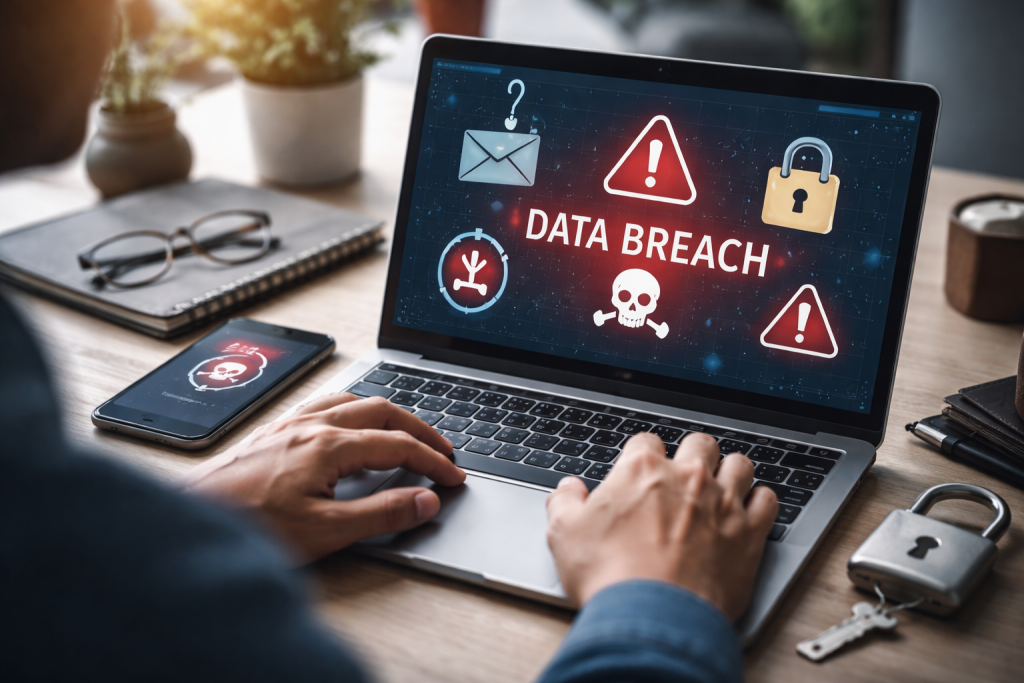
Phishing is a widespread cyberattack that uses deceptive communications to trick individuals into revealing sensitive information. These attacks often impersonate trustworthy entities.
Contents
- 0.1 Common Phishing Techniques
- 0.2 Recognizing Phishing Attempts
- 0.3 How Ransomware Works
- 0.4 Preventing Ransomware Attacks
- 0.5 Common Social Engineering Tactics
- 0.6 Counteracting Social Engineering
- 0.7 The Mechanism of Email Spoofing
- 0.8 Crafting Fake Websites and Their Dangers
- 0.9 Identifying and Avoiding These Tools
- 0.10 Strong Passwords and Multi-Factor Authentication
- 0.11 Ensure that your software is regularly updated and that you are using security software.
- 0.12 Understanding the Cost of a Data Breach
- 1 FAQs
- 1.1 1. What is phishing, and how do hackers use deceptive tactics to trick individuals?
- 1.2 2. How do cybercriminals hold data hostage through ransomware?
- 1.3 3. What is social engineering, and how do hackers manipulate human behaviour to gain access to sensitive information?
- 1.4 4. What are email spoofing and fake websites, and how do hackers use them as common tools in their arsenal?
- 1.5 5. What are some tips for recognising and avoiding cyberattacks to protect personal and business data?
Common Phishing Techniques
Phishing emails or messages often contain a sense of urgency or an enticing offer. They might claim your account has been compromised, or that you’ve won a prize. The goal is to prompt a quick, unthinking response. These communications typically include links to fake websites or attachments containing malware.
Attackers often use spoofed sender addresses to make emails appear legitimate. For example, an email might look like it comes from your bank, but the actual sender’s address might reveal a different domain upon closer inspection. The hacker targets you, hoping to gain access to your confidential information.
Recognizing Phishing Attempts
Check emails and messages for inconsistencies. Please review the sender’s email address with care. Hover your mouse over links before clicking them to reveal the actual URL. If the URL does not match the purported sender, it is likely a phishing attempt. Look for grammatical errors or unusual phrasing within the message, which are often indicators of a fraudulent message. Trust your instincts; if something feels off, it probably is.
Ransomware is a type of malicious software designed to block access to a computer system or data until a ransom is paid. It acts like a digital kidnapper, holding your files hostage.
How Ransomware Works
Once ransomware infects a system, it encrypts files, making them inaccessible. The attacker then demands a payment, usually in cryptocurrency, in exchange for the decryption key. There is no guarantee that paying the ransom will restore your data. Sometimes, even after payment, the attackers do not provide the key, or it does not work.
Ransomware often spreads through phishing emails, malicious websites, or infected software downloads. Once inside your system, it can spread rapidly, encrypting files on your computer and connected network drives.
Preventing Ransomware Attacks
Regularly back up your data to an external drive or cloud service. This ensures that even if your system is compromised, you can restore your files without paying a ransom. Keep your operating system and software updated, as these updates often include security patches that address vulnerabilities. Use robust antivirus software and maintain its subscription. Be wary of suspicious emails and links, as these are primary entry points for ransomware.
Social engineering is a manipulation technique that exploits human error to gain access to private information, systems, or data. It plays on psychological vulnerabilities, not technical ones.
Common Social Engineering Tactics
Pretexting involves creating a believable, fake scenario to elicit information. For example, an attacker might impersonate an IT support person needing your password to “fix” a problem. Baiting uses enticing offers, like free downloads or prize winnings, to trick victims into downloading malware. Quid pro quo attacks offer a small service in exchange for information, such as offering “technical support” in exchange for login credentials.
These tactics exploit trust, curiosity, or fear. These tactics create a false sense of legitimacy, which can lead you to relax your defences.
Counteracting Social Engineering
Develop a healthy scepticism towards unsolicited requests for information. Verify the identity of the person making the request through an independent channel. For example, if someone claiming to be from your bank calls, hang up and call the bank directly using their official phone number. Do not rely on contact information provided by the caller. Educate yourself and others about these tactics. Awareness is your first line of defense.
Email spoofing and fake websites are fundamental tools in a hacker’s arsenal, used to create a convincing façade for various cyberattacks. Attackers wear these masks.
The Mechanism of Email Spoofing
Email spoofing involves forging the sender address of an email so that the message appears to originate from someone or somewhere other than the actual source. This allows attackers to impersonate legitimate entities, such as banks, government agencies, or even colleagues. The goal is to trick the recipient into believing the email is authentic, making them more likely to open malicious attachments or click fraudulent links.
Examining the email headers often reveals the true sender, even though it’s easy to alter the “From” address. However, most users do not regularly inspect email headers. This defect makes spoofing an effective tactic for widespread attacks.
Crafting Fake Websites and Their Dangers
Fake websites, also known as phishing sites, are replicas of legitimate websites. Attackers create these sites to trick users into entering their credentials, credit card numbers, or other sensitive data. These sites often use domain names that are very similar to legitimate ones, sometimes with a slight misspelling or a different top-level domain (e.g., .net instead of .com). These sites mimic the real thing, frequently replicating logos, layouts, and even content.
When you click a malicious link in a phishing email, it often directs you to one of these fake websites. The attackers capture your information once you enter it. These sites sometimes even redirect you back to the real website after data capture, making it harder for you to realize you’ve been compromised.
Identifying and Avoiding These Tools
Always check the URL of a website before entering any sensitive information. Look for the padlock icon in the address bar, indicating a secure connection (HTTPS). However, even secure sites can be fake, so always cross-reference the domain name. If an email or message prompts you to visit a website, type the URL directly into your browser instead of clicking the link. This bypasses any malicious redirects. Be sceptical of emails that demand immediate action or provide generic greetings instead of your name, as these are common signs of spoofed emails and links to fake sites.
Effective data protection requires a combination of technical measures and informed vigilance. You are the ultimate gatekeeper of your data.
Strong Passwords and Multi-Factor Authentication
Create strong, unique passwords for each of your online accounts. A strong password combines uppercase and lowercase letters, numbers, and symbols and is at least 12 characters long. Avoid using easily guessable information like birthdays or common words. A password manager can help you store and manage these complex passwords securely.
Enable multi-factor authentication (MFA) whenever possible. MFA adds an extra layer of security by requiring a second form of verification besides your password, such as a code sent to your phone or a fingerprint scan. Even if an attacker obtains your password, they cannot access your account without this second factor.
Ensure that your software is regularly updated and that you are using security software.
Make sure to regularly update your operating system, web browsers, and all installed software. Software updates often include critical security patches that fix vulnerabilities attackers could exploit. Ignoring these updates leaves you exposed.
Install and maintain reputable antivirus and anti-malware software. These programs detect and remove malicious software, protecting your system from various threats. Always keep the software running and its definitions updated. The software acts as your digital immune system.
Understanding the Cost of a Data Breach
A data breach can have severe consequences, ranging from financial losses to reputational damage. For individuals, a breach might lead to identity theft, financial fraud, or unwanted public exposure of private information. The process of recovering from identity theft can be long and arduous.
For businesses, the costs are often much higher. They include legal fees, regulatory fines, customer notification expenses, credit monitoring services for affected individuals, and lost revenue due to damaged trust. A company’s reputation can take years to rebuild after a significant breach. Understanding these potential outcomes illustrates the need for proactive security measures. Staying vigilant is not merely a suggestion; it is a necessity in today’s digital world. Regularly review your online accounts for unusual activity and be cautious about what information you share online. Your data is valuable, and it’s your responsibility to protect it.
FAQs
1. What is phishing, and how do hackers use deceptive tactics to trick individuals?
Phishing is a type of cyberattack where hackers use deceptive tactics, such as fraudulent emails or fake websites, to trick individuals into providing sensitive information like passwords, credit card numbers, or personal data.
2. How do cybercriminals hold data hostage through ransomware?
Ransomware is a type of malware that encrypts a victim’s files and demands payment, often in cryptocurrency, in exchange for the decryption key. Cybercriminals use this tactic to hold individuals’ or organisations’ data hostage until the ransom is paid.
Social engineering is a tactic used by hackers to manipulate individuals into divulging confidential information or performing actions that compromise security. This can include tactics like impersonation, pretexting, or baiting to gain access to sensitive data.
4. What are email spoofing and fake websites, and how do hackers use them as common tools in their arsenal?
Email spoofing is the forgery of an email header to make it appear as though it came from a trusted source, while fake websites are designed to mimic legitimate sites to trick individuals into providing sensitive information. Hackers use these tools to deceive individuals and gain access to their data.
5. What are some tips for recognising and avoiding cyberattacks to protect personal and business data?
Some tips for recognising and avoiding cyberattacks include being cautious of unsolicited emails or messages, verifying the authenticity of websites before entering sensitive information, keeping software and security systems up to date, and educating employees about cybersecurity best practices.

At SecureByteHub, we are passionate about simplifying cybersecurity and technology for everyone. Our goal is to provide practical, easy-to-understand guides that help individuals, students, and small businesses stay safe in the digital world. From online security tips to the latest tech insights, we aim to empower our readers with knowledge they can trust